
Walk your dog in style while protecting the planet with our top-rated eco-friendly gear.
Introduction
The humble dog collar and leash are essentials for any pup parent, and switching to green dog collars helps reduce the waste caused by millions of discarded nylon products every year.
As a conscious consumer in 2025, you know that choosing green dog collars is more than style—it’s a way to support a healthier planet with every purchase you make.
By selecting green dog collars and leashes, you lower your environmental impact while ensuring that your pet’s daily gear is durable, safe, and comfortable.
This guide explores the best brands and sustainable materials, showing how green dog collars can keep your pup eco-chic on every walk.
What Are Green Dog Collars?
Green dog collars and eco friendly leashes are walking accessories designed with sustainability in mind, offering a safe and stylish alternative for daily use.
Unlike standard nylon products, green dog collars replace petroleum-based materials with eco-conscious options like hemp, cork, and upcycled rubber.
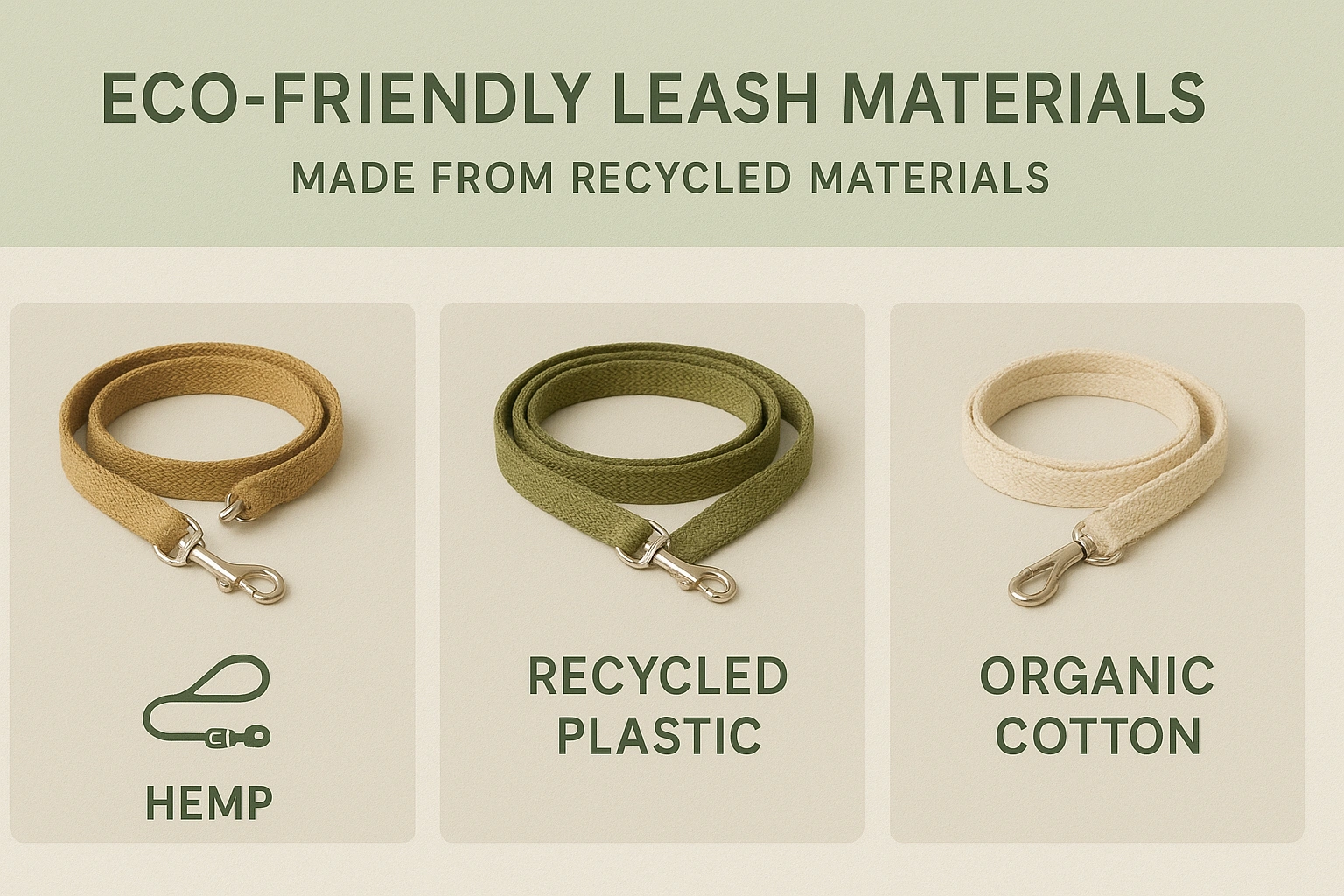
With recycled fabrics such as rPET made from plastic bottles, green dog collars ensure durability and comfort without sacrificing environmental responsibility.
The focus of green dog collars is not only on safety and strength but also on reducing their footprint from sourcing all the way to end-of-life.
The demand for these products is a reflection of a larger trend. The Pet Sustainability Coalition reports that a growing majority of pet owners are actively seeking out sustainable brands, proving that eco-friendly is no longer a niche—it’s the future of the pet industry.

Why Eco-Friendly Walking Gear Matters
Making the switch to green dog collars offers benefits that reach far beyond just looking stylish on daily walks.
By choosing green dog collars, you actively reduce reliance on virgin plastics and help minimize the environmental impact of pet gear.
Green dog collars also protect your pet from toxic dyes and chemicals, giving them comfort and safety along with sustainability.
In the bigger picture, green dog collars support ethical companies and transparent practices, making your purchase a conscious act for the planet.
Reduce Reliance on Virgin Plastics
The most common collar material, nylon, is a plastic derived from crude oil, but green dog collars provide a safer and more sustainable alternative.
By selecting green dog collars made from natural fibers or recycled plastics, you take a simple step toward lowering reliance on fossil fuels.
Many brands now design green dog collars with hemp, cork, or rPET, which combine durability with a reduced environmental footprint.
Ultimately, green dog collars prove that everyday essentials can be functional, stylish, and eco-conscious without harming the planet.
Protect Your Pet from Toxic Dyes and Chemicals
Many cheap collars are treated with chemical dyes that can irritate a dog’s skin. Natural materials like hemp are hypoallergenic, and reputable eco-brands use non-toxic, pet-safe dyes. This is part of a larger commitment to a non-toxic home, which includes choices like the best eco-friendly cat litter.
Support Ethical and Transparent Companies
Brands committed to sustainability are often more transparent about their manufacturing processes, ensuring fair labor practices and high-quality construction. Your purchase supports businesses that are doing things the right way.
Core Features: What to Look for in a Green Collar
A great eco-friendly collar is a sum of its parts. Here’s what to evaluate:
1. The Webbing (Material): This is the main fabric of the collar. Look for durable, sustainable options like hemp, cork, or rPET.
2. The Hardware (Buckles & D-Rings): This is crucial for safety. Opt for strong, recyclable metals like stainless steel or brass over plastic buckles.
3. The Stitching: Look for reinforced stitching, especially around the D-ring and buckle, to ensure the collar can withstand pulling.
4. The Brand’s Ethics: Does the company have certifications (like B Corp)? Are they transparent about where and how their products are made?
Product Review: CycleDog Recycled Pet Leash
I tested the CycleDog leash, which is famous for its unique construction: the backing is made from upcycled inner tubes from bicycle tires. This makes the leash incredibly soft and comfortable to hold.
The webbing on the front is made from recycled plastic bottles, and it features a handy bottle opener built into the hardware (which they call the “Pup Top”). After several months of use, the leash is still in perfect condition. The rubber backing provides a great grip, especially on rainy days, and it’s a fantastic conversation starter at the dog park.
| Pros | Cons |
|---|---|
| Made from upcycled and recycled materials. | The rubber backing makes it slightly heavier than a standard nylon leash. |
| Very comfortable and grippy handle. | Limited color patterns compared to some brands. |
| Durable construction and fun bottle opener feature. | The rubber can have a slight odor when new. |
Comparison: Top Sustainable Collar & Leash Materials
Here’s how the most popular eco-friendly materials stack up.
| Material | Source | Pros | Cons | Best For |
|---|---|---|---|---|
| Hemp | Hemp plant fiber | Extremely strong, hypoallergenic, gets softer with use. | Can absorb water and take longer to dry. | Dogs with sensitive skin; strong pullers. |
| Recycled PET (rPET) | Recycled plastic bottles | Durable, water-resistant, vibrant colors. | Is still a form of plastic. | All-weather adventures; style variety. |
| Cork | Bark of the cork oak tree | Lightweight, water-resistant, vegan leather alternative. | Not as strong as hemp for heavy pullers. | Stylish, everyday wear for small to medium dogs. |
| Upcycled Rubber | Bicycle inner tubes | Very durable, waterproof, unique look. | Can be heavy, limited aesthetic. | Leash handles and rugged gear. |
Common Mistakes to Avoid When Buying
Make a smart, sustainable choice by avoiding these common errors.
- Ignoring the Hardware: A sustainable fabric collar with a flimsy plastic buckle is a safety hazard. Always prioritize strong metal hardware.
- Choosing the Wrong Material for Your Dog’s Lifestyle: A beautiful cork collar might not be the best choice for a dog that loves to swim and roll in the mud. Match the material to the activity.
- Forgetting About Comfort: Ensure the material is soft and won’t chafe your dog’s neck. Hemp is particularly good for this as it softens over time.
- Not Measuring Correctly: An ill-fitting collar is dangerous. Measure your dog’s neck and check the brand’s sizing chart carefully.
Expert Tips & Best Practices
We asked a sustainable pet gear designer for her top tips.
“Look beyond the product to the company’s mission. The best eco-brands don’t just use sustainable materials; they embrace sustainable practices throughout their business, from minimal packaging to giving back to environmental causes.”
— Sarah Jenkins, Pet Gear Designer
Top 5 Expert Tips:
- Check for a Lifetime Guarantee: Brands that offer a lifetime guarantee (like LupinePet Eco) are confident in their durability and will repair or replace gear, which is the ultimate form of waste reduction.
- Wash Your Gear Regularly: Keeping collars and leashes clean prevents bacterial buildup and extends their life. Most eco-friendly options can be hand-washed with mild soap.
- Have a “Mucky” Set and a “City” Set: If your dog is very active, have a rugged, waterproof set for muddy adventures and a stylish, lightweight set for city walks.
- Donate Old Gear: If your old collar is still in good condition, donate it to a local animal shelter instead of throwing it away.
- Upcycle at End-of-Life: When a leash is truly worn out, cut off the hardware for future DIY projects and compost the natural fabric if possible.
Frequently Asked Questions (FAQ)
Q: Are hemp dog collars durable enough for strong pullers?
A: Yes, hemp is an incredibly strong natural fiber, often compared to high-tensile steel for its durability-to-weight ratio. High-quality hemp collars with reinforced stitching and solid metal hardware are an excellent and durable choice for strong dogs.
Q: How do I clean a cork dog collar?
A: Cork is naturally water-resistant and antimicrobial. To clean it, simply wipe it down with a damp cloth and a mild, natural soap. Avoid harsh chemical cleaners, as they can damage the material.
Q: What is rPET webbing?
A: rPET stands for recycled polyethylene terephthalate. It’s a strong, durable fabric webbing made from recycled plastic bottles. It’s a very popular material for eco friendly leashes and collars because it’s water-resistant, vibrant, and diverts plastic from landfills.
Q: Are eco-friendly collars more expensive?
A: They can have a slightly higher upfront cost than the cheapest nylon collars due to the sustainable materials and ethical manufacturing processes. However, they are often more durable and last longer, making them a better long-term investment.
Q: What should I look for in the hardware of a green dog collar?
A: Look for solid, durable hardware made from materials like stainless steel or brass, which are long-lasting and recyclable. Avoid plastic buckles, as they are the most common point of failure on a collar and contribute to plastic waste.
Conclusion
Outfitting your dog with **green dog collars** and **eco friendly leashes** is a simple swap with a significant positive impact. By choosing products made from sustainable and recycled materials, you reduce waste, support ethical businesses, and ensure your pet is wearing safe, non-toxic gear. It’s a choice that beautifully combines style, durability, and a commitment to a healthier planet. For more tips on sustainable pet ownership, visit us at weton.biz.id.