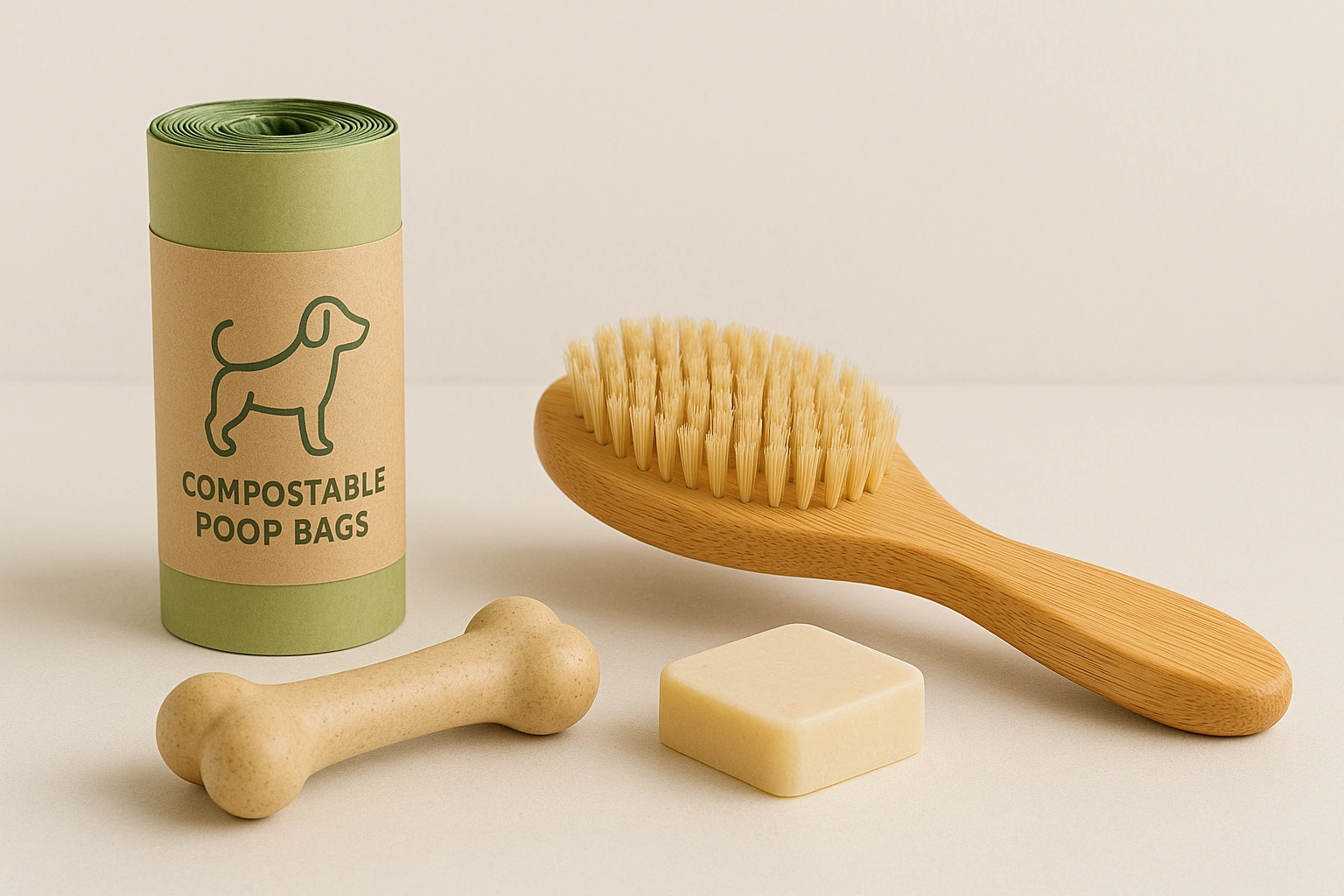
Cut through the greenwashing. We review the eco-friendly products that make a real difference.
Introduction
It’s estimated that the average dog owner uses over 500 plastic poop bags per year, contributing to mountains of waste that will outlive us all. As pet owners in 2025, many are turning to biodegradable pet products as a first step to reducing this impact.
The market is now flooded with biodegradable pet products, but not all are created equal. Choosing wisely means understanding which options are genuinely effective and which ones are just clever marketing.
When exploring biodegradable pet products, the challenge is separating convenience from true sustainability. This guide helps clarify the difference so you know where your money makes the most impact.
By highlighting the biodegradable pet products that actually work, this review cuts through the noise and shows the practical choices that can help you build a more sustainable life with your pet.
What Are Biodegradable Pet Products?
In simple terms, a biodegradable product is one that can be broken down by bacteria, fungi, or other microorganisms into natural elements like water, carbon dioxide, and organic matter. However, the term “biodegradable” itself can be misleading. According to the Wired, there is no legal timeframe for how long this process must take. A product could take 500 years to break down and still technically be called biodegradable.
This is why understanding the difference between biodegradable and compostable is crucial when choosing biodegradable pet products.
A compostable product is biodegradable within a specific, shorter timeframe (usually 90–180 days) and breaks down into non-toxic components, which makes compostable options stand out among biodegradable pet products.
For pet owners, this distinction is key to making truly impactful choices and helps identify the biodegradable pet products that genuinely benefit the environment.
By learning how biodegradable pet products differ from compostable ones, you can make smarter decisions that reduce waste and support a more sustainable lifestyle.
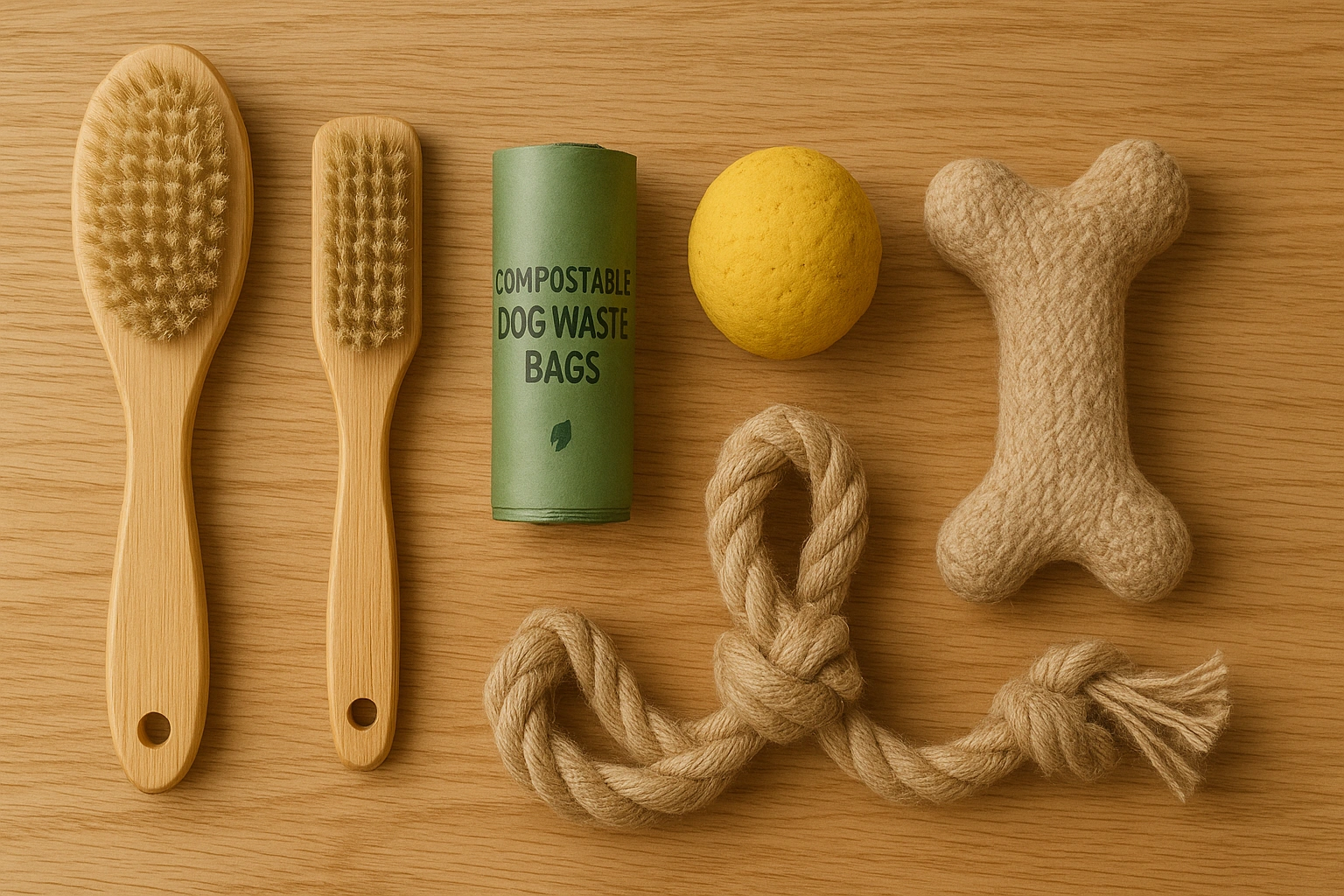
Why Choosing Biodegradable Products Matters
Switching to biodegradable alternatives is more than just a trend; it’s a conscious choice, and biodegradable pet products make that shift easier for every owner.
Choosing biodegradable pet products delivers tangible benefits for the planet by cutting down on plastic and long-lasting waste.
For your pet, biodegradable pet products also mean healthier materials with fewer toxins in toys, grooming tools, and everyday essentials.
Ultimately, adopting biodegradable pet products is a simple but powerful way to create lasting positive change for both your home and the environment.
Reduce Landfill Burden
Conventional plastic pet products can sit in landfills for centuries. Biodegradable options, especially compostable ones, break down and return to the earth, significantly reducing the volume of long-term waste.
Protect Wildlife and Ecosystems
Plastic waste often ends up in oceans and natural habitats, harming wildlife. By choosing products that decompose naturally, you help reduce the amount of persistent plastic pollution that threatens countless species.
Promote Healthier Materials
Many biodegradable products are made from natural, non-toxic materials like bamboo, cornstarch, and hemp. This means fewer synthetic chemicals and plastics in your home and around your pet. Our guide to the best eco-friendly cat litter explores similar health benefits.
The Lifecycle of a Biodegradable Product
Understanding how these products work helps in choosing the right ones. Here’s a simplified lifecycle:
1. Sourcing: Raw materials are plant-based (e.g., corn, bamboo) instead of petroleum-based.
2. Manufacturing: Production processes often aim for a lower carbon footprint.
3. Use: The product serves its purpose (e.g., a poop bag, a grooming wipe).
4. Disposal: This is the critical step. For best results, compostable products should go to an industrial composting facility. Others biodegrade over time in a landfill.
5. Decomposition: Microorganisms break the product down into soil, water, and gas.
Product Review: Earth Rated Compostable Poop Bags
I decided to test one of the most popular biodegradable pet products on the market: Earth Rated’s certified compostable poop bags. I used them for a month on daily walks with my beagle.
They are noticeably thicker and softer than standard plastic bags, yet they are extremely durable. There were no issues with tearing or leaking. The biggest difference is the peace of mind, knowing that the bag will break down in a composting environment instead of sitting in a landfill for centuries.
| Pros | Cons |
|---|---|
| BPI-certified compostable. | Higher cost per bag than plastic. |
| Strong, durable, and leak-proof. | Requires access to a composting facility for ideal breakdown. |
| Made from vegetable starches. | Can lose integrity if stored for over a year. |
Comparison: Top 5 Biodegradable Pet Products
Navigating the options can be tough. Here’s a comparison of five popular product categories.
| Product | Key Features | Pros | Cons | Best For |
|---|---|---|---|---|
| Compostable Poop Bags | Plant-based, BPI-certified | Huge plastic reduction | Needs proper composting | Every dog owner |
| Bamboo Grooming Wipes | Made from bamboo viscose | Soft, strong, compostable | Can be pricey | Quick clean-ups |
| Shampoo Bars | Solid form, no bottle | Zero plastic waste, long-lasting | Can be slippery to handle | Minimalist pet owners |
| Natural Rubber Toys | Sustainably harvested rubber | Durable, non-toxic, biodegradable | Not for super-aggressive chewers | Average chewers |
| Bamboo Pet Brushes | Bamboo handle, natural bristles | Ergonomic, plastic-free | Bristles may wear over time | Regular grooming routines |

Common Mistakes to Avoid When Buying
Avoid these pitfalls to ensure your purchases are truly making a positive impact.
- Confusing “Biodegradable” with “Compostable”: Always opt for “compostable” when possible, as it implies a much faster and cleaner breakdown.
- Improper Disposal: Tossing a compostable bag in a landfill suffocates it, preventing it from breaking down as intended. Follow disposal instructions.
- Ignoring the Full Product Lifecycle: Consider the packaging. A biodegradable toy shipped in layers of plastic isn’t a truly sustainable choice.
- Believing All “Bio-Plastics” are Equal: Some bio-plastics are just mixed with additives and don’t fully break down. Look for 100% plant-based materials.
Expert Tips & Best Practices
We consulted a materials scientist for advice on choosing genuine biodegradable products.
“Look for certifications. The BPI logo in North America or the ‘OK compost’ logo in Europe are your best indicators of a legitimately compostable product. Without them, you’re relying on marketing claims alone.”
— Dr. Marcus Thorne, Materials Scientist
Top 5 Expert Tips:
- Prioritize Third-Party Certifications: They are the most reliable proof of a product’s claims.
- Read the Ingredients: Look for simple, recognizable materials like cornstarch, bamboo, or natural rubber.
- Start with High-Frequency Items: Swap products you use daily, like poop bags or wipes, for the biggest impact.
- Ask Brands Questions: If you’re unsure, email the company and ask about their materials and disposal recommendations.
- Remember the 5 R’s: Refuse, Reduce, and Reuse before you have to Recycle or Rot. The most sustainable product is often the one you don’t need to buy.
Frequently Asked Questions (FAQ)
Q: Are ‘biodegradable’ and ‘compostable’ the same thing?
A: No, they are not. While all compostable products are biodegradable, not all biodegradable products are compostable. Compostable items break down into non-toxic organic matter in a specific timeframe. ‘Biodegradable’ is a broader term and lacks a specific timeframe, meaning some products can take years to decompose.
Q: Do biodegradable plastics solve the plastic pollution problem?
A: Not entirely. Many biodegradable plastics require specific conditions found in industrial composting facilities, not in a typical landfill or the ocean. While they are a step in the right direction, reducing overall consumption is still the most effective solution.
Q: What is the best biodegradable product to start with?
A: Compostable poop bags are the easiest and most impactful first swap. They directly address a daily source of plastic waste and are widely available from reputable brands.
Q: How can I spot greenwashing on pet product labels?
A: Be wary of vague terms like ‘eco-friendly’ or ‘earth-friendly’ without any proof. Look for third-party certifications like the BPI (Biodegradable Products Institute) logo for compostable products or USDA Certified Biobased Product labels.
Q: Are bamboo pet products truly biodegradable?
A: Natural bamboo is fully biodegradable. However, many bamboo products are composites held together with a melamine resin, which is not biodegradable. Look for products labeled as ‘100% bamboo’ or made from bamboo fiber without synthetic binders.
Conclusion
Choosing the right **biodegradable pet products** is a powerful step towards a more sustainable lifestyle. By focusing on certified compostable options, understanding the materials, and prioritizing high-impact swaps like poop bags and **eco grooming essentials**, you can make choices that are genuinely better for the planet. While no single product can solve the waste crisis, our collective, informed decisions can create a massive positive change. For more tips on eco-friendly living, explore the resources at weton.biz.id.