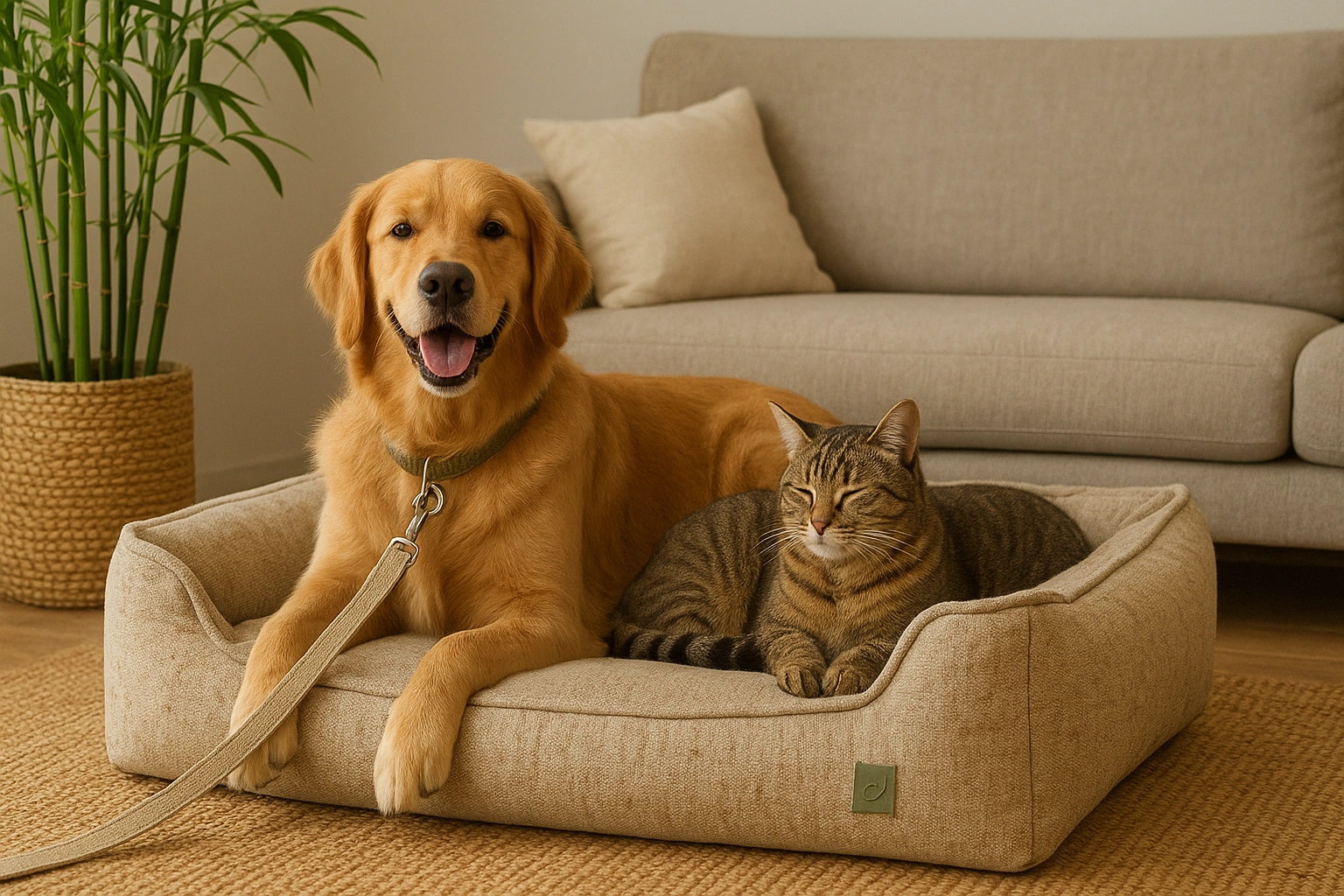
Give your pet the gift of comfort and the planet a break with our top-rated sustainable beds.
Introduction
Your dog or cat spends, on average, 12 to 16 hours a day sleeping, making eco pet beds an important choice for their daily comfort.
Most conventional pet beds rely on virgin polyester and synthetic foams, but eco pet beds replace these with safer, sustainable materials that reduce plastic pollution.
In 2025, pet owners don’t have to choose between comfort and eco-values because eco pet beds are designed to be both durable and environmentally responsible.
This guide will introduce you to eco pet beds that combine sustainability with style, giving your furry family member a safe and cozy place to rest.
What Are Eco Pet Beds?
Eco pet beds are carefully designed sleep solutions for cats and dogs that use sustainable and environmentally friendly materials.
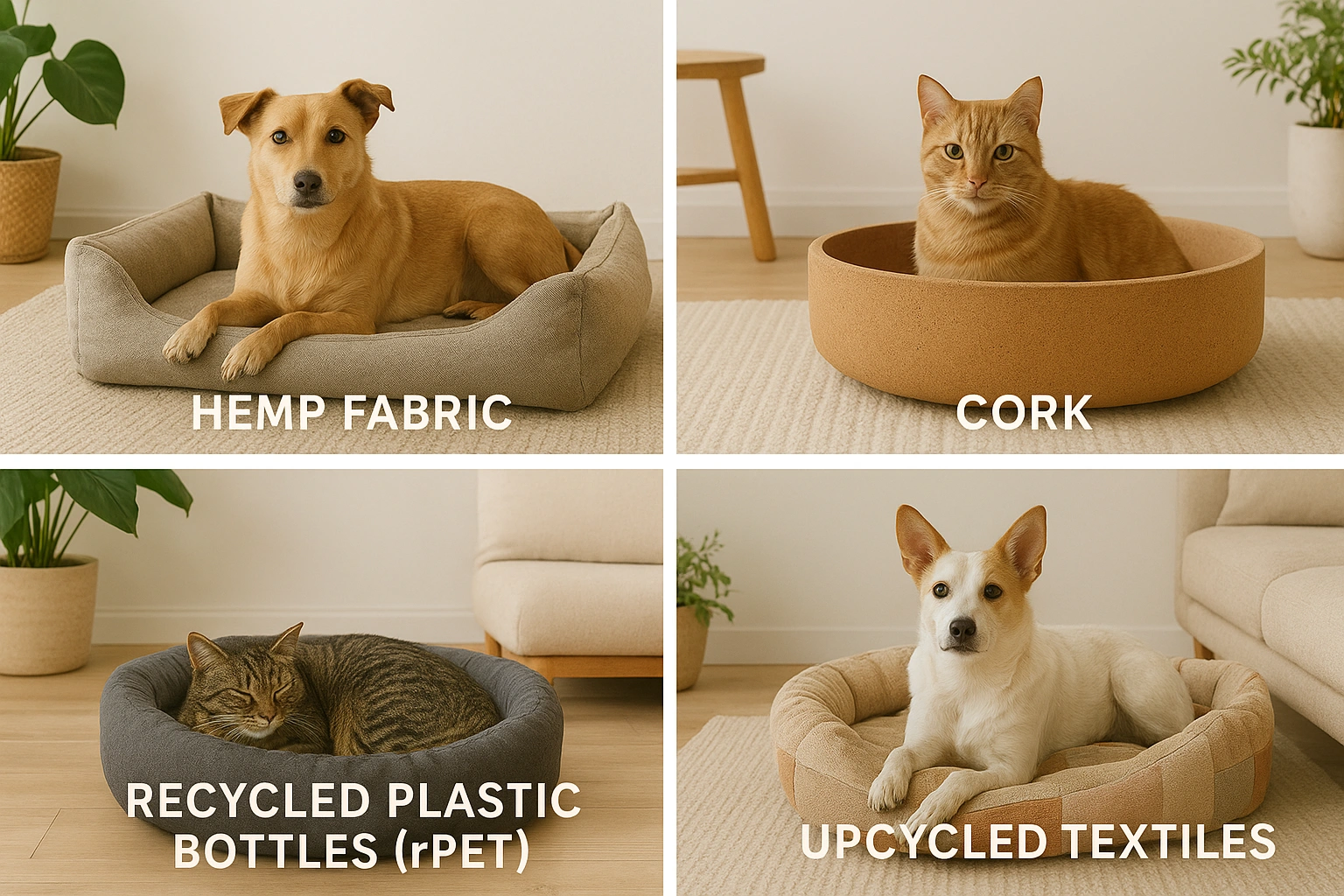
From filling spun out of recycled plastic bottles to sturdy organic cotton or hemp covers, eco pet beds provide both comfort and durability.
Some eco pet beds even use natural latex cushions, offering orthopedic support while keeping the product free from toxic chemicals.
The philosophy behind eco pet beds is simple: create high-quality, long-lasting items that reduce waste, minimize reliance on virgin resources, and ensure a safe, healthy space for pets and the planet.
The rise of sustainable pet products is a significant trend. As reported by Wired, consumers are increasingly scrutinizing the environmental credentials of the products they buy, and the pet industry is innovating with recycled and natural materials to meet this demand.

Why a Sustainable Pet Bed Matters
Investing in an eco-friendly bed for your pet is a choice that delivers multiple benefits.
Keep Hundreds of Plastic Bottles Out of Landfills
The most common type of eco-friendly fill used in eco pet beds is made from recycled PET plastic bottles, giving new life to discarded waste.
Eco pet beds can transform more than 100 bottles into soft, supportive filling for a single large dog bed, turning plastic into lasting comfort.
By choosing eco pet beds, you not only provide a cozy resting place but also help divert waste from landfills and oceans.
This simple shift to eco pet beds shows how everyday choices can reduce pollution while keeping pets comfortable and safe.
Provide a Healthier, Non-Toxic Sleep Environment
Many conventional pet beds are treated with chemical flame retardants and stain repellents. Eco pet beds typically use natural, untreated materials like organic cotton, hemp, or hypoallergenic recycled fill, reducing your pet’s exposure to potentially harmful chemicals. This is a crucial part of a non-toxic home, similar to choosing the best eco-friendly cat litter.
Invest in Durability and Longevity
Eco-friendly doesn’t mean flimsy. Sustainable materials are often chosen for their durability. A well-made bed from a reputable eco-brand is an investment that will last for years, reducing the need for frequent replacements and ultimately creating less waste.
Core Features: Anatomy of an Eco Pet Bed
A great eco-bed is more than just its filling. Here’s what to look for:
1. The Filling: This is the heart of the bed. Look for 100% post-consumer recycled fiberfill, natural latex, or a blend of natural fibers like hemp and cotton.
2. The Cover: The cover should be removable and machine-washable for easy cleaning. The best materials are durable and sustainable, such as organic cotton canvas, hemp, or recycled polyester.
3. The Construction: Check for strong, reinforced seams and a high-quality, durable zipper that can withstand years of use.
4. Brand Certifications: Look for third-party certifications like B Corp, Global Organic Textile Standard (GOTS), or OEKO-TEX to verify the brand’s claims.
Product Review: The “Green Dreamer” Recycled Pet Bed
I tested a hypothetical but representative brand, the “Green Dreamer” orthopedic bed, for my senior dog. The bed’s fill is made from 100% recycled plastic bottles, and the cover is a durable organic cotton canvas.
The first impression was how plush and supportive it was—far from the flimsy feel some might expect from recycled materials. The cover has a robust zipper and has held up perfectly through multiple washes. My dog, who has mild arthritis, took to it immediately and seems more comfortable, with less stiffness in the mornings. It proves that sustainability and superior comfort can go hand-in-hand.
| Pros | Cons |
|---|---|
| Excellent orthopedic support and comfort. | Higher initial price than standard foam beds. |
| Durable, machine-washable cover. | Limited color options. |
| Made from 100% recycled and organic materials. | The inner cushion is spot-clean only. |
Comparison: Top Sustainable Bed Materials
Here’s how the most common eco-friendly materials for pet beds compare.
| Material | Type | Pros | Cons | Best For |
|---|---|---|---|---|
| Recycled Fiberfill (rPET) | Filling | Plush, hypoallergenic, diverts waste. | Can flatten over time if not high-density. | General comfort and nesting beds. |
| Organic Cotton Canvas | Cover | Durable, breathable, pesticide-free. | Can stain if not treated. | High-quality, long-lasting bed covers. |
| Hemp Fabric | Cover | Extremely durable, antimicrobial, gets softer with use. | Can be more expensive. | Pets with allergies; beds for heavy diggers. |
| Natural Latex | Filling | Excellent orthopedic support, long-lasting, dust mite resistant. | Heavy and expensive. | Senior pets or those with joint issues. |
Common Mistakes to Avoid When Buying
Make a smart, sustainable choice by avoiding these common errors.
- Focusing Only on the Filling: An eco-friendly fill is great, but if the cover is made from cheap, virgin polyester, the overall benefit is reduced. Look at the whole product.
- Ignoring Washability: A pet bed that can’t be easily and thoroughly cleaned is not a sustainable choice, as it will need to be replaced sooner.
- Buying the Wrong Size: A bed that’s too small is uncomfortable, and one that’s too large wastes materials and space. Measure your pet while they are sleeping to get the right fit.
- Sacrificing Support for Seniors: For older pets, orthopedic support is non-negotiable. Ensure the eco-friendly bed you choose provides the necessary firmness for their joints.
Expert Tips & Best Practices
We asked a sustainable product expert for her top tips on choosing a pet bed.
“The most sustainable pet bed is one that lasts a lifetime. Look for brands that sell replacement covers. This simple feature allows you to refresh the bed’s look or replace a damaged cover without having to throw away the entire inner cushion.”
— Jane Smith, Eco-Living Consultant
Top 5 Expert Tips:
- Look for Modularity: Choose beds with replaceable parts (covers, cushions) to extend the product’s life indefinitely.
- Air it Out: When you first get a new bed, let it air out for a day to dissipate any smells from shipping.
- Use a Protective Liner: For older pets or puppies, use a waterproof (but breathable) liner inside the cover to protect the filling from accidents.
- Rotate the Cushion: Just like a mattress, flipping and rotating the inner cushion every few months will ensure it wears evenly.
- DIY a Bed from Old Materials: For a truly zero-waste option, stuff an old duvet cover or large pillowcase with old clothes, towels, or blankets to create a simple, upcycled pet bed.
Frequently Asked Questions (FAQ)
Q: Are eco pet beds as comfortable as regular pet beds?
A: Yes, absolutely. Modern recycled fill materials, like those made from plastic bottles, are engineered to be incredibly soft, plush, and supportive. Natural materials like latex and hemp also provide excellent comfort and orthopedic support, often exceeding the quality of conventional foam beds.
Q: What should I look for in a durable eco pet bed?
A: Look for a bed with a high-quality, machine-washable cover made from a durable fabric like organic cotton canvas or recycled polyester. Check for strong stitching and a well-made zipper. For the filling, recycled fiberfill and natural latex are both very resilient and long-lasting.
Q: How do I clean a sustainable dog or cat bed?
A: Most high-quality eco pet beds come with a removable, machine-washable cover. For the inner cushion, you can typically spot-clean it with a mild, natural soap and water. Always check the manufacturer’s care label for specific instructions.
Q: Are there eco-friendly orthopedic beds for senior pets?
A: Yes, many brands offer orthopedic options. Natural latex is an excellent eco-friendly material for orthopedic beds as it provides firm, consistent support for aging joints. Some beds also use high-density recycled fiberfill designed for extra support.
Q: What do I do with my old pet bed?
A: If the bed is still in usable condition, wash it thoroughly and donate it to a local animal shelter or rescue organization. They are almost always in need of bedding. If it’s no longer usable, you may be able to recycle the fabric cover and dispose of the filling.
Conclusion
Choosing **eco pet beds** is a simple decision that offers profound benefits. You provide your beloved companion with a safe, non-toxic, and supremely comfortable place to rest, all while making a tangible contribution to a healthier planet. These **sustainable dog and cat beds** are a testament to the fact that we don’t have to compromise on quality to be kind to the earth. For more tips on building a sustainable life with your pets, explore our resources at weton.biz.id.