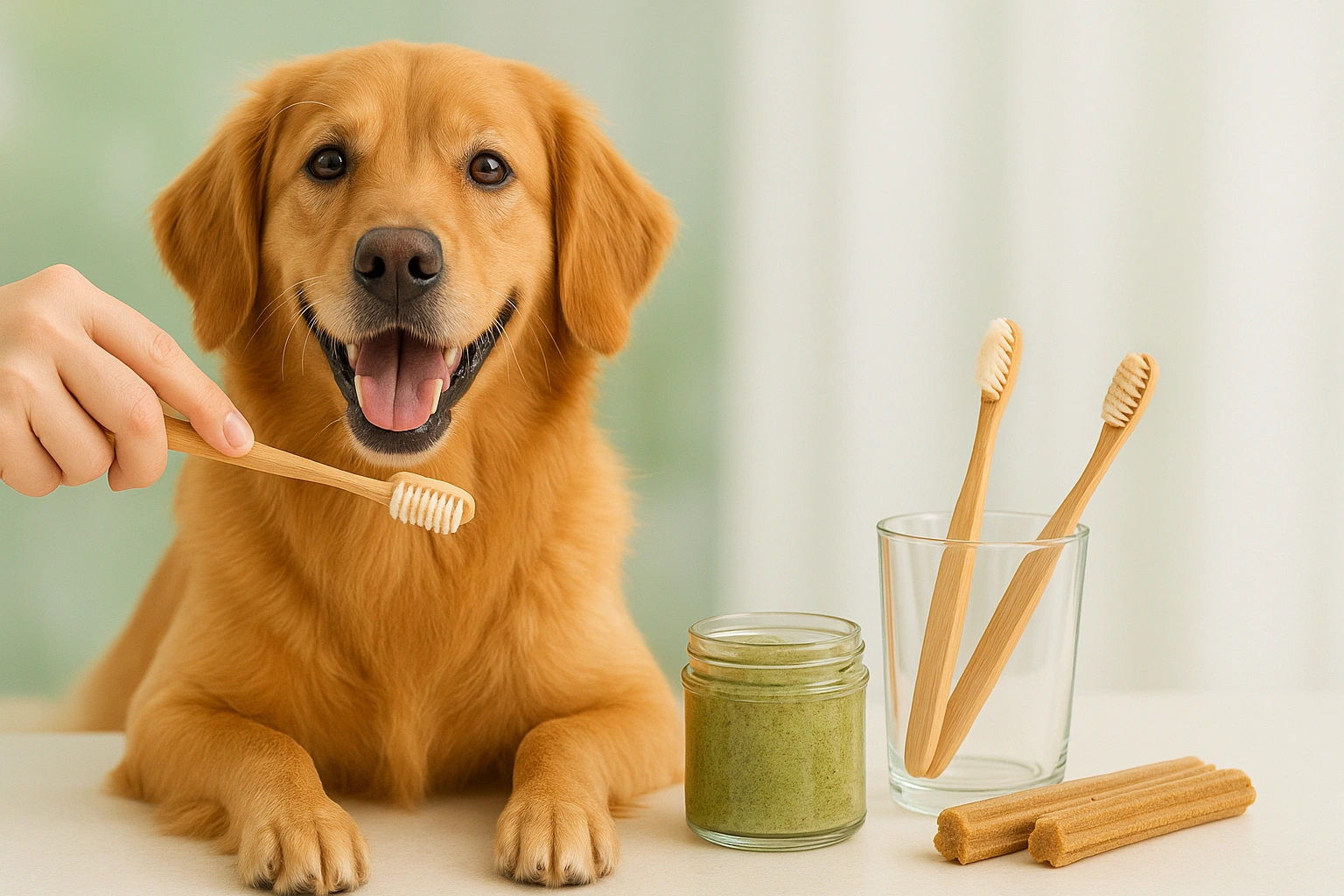
Keep your pet’s smile bright and the planet clean with these sustainable hygiene tips.
Introduction
Did you know that by the age of three, over 80% of dogs show signs of dental disease? This is where eco pet dental care becomes an important step in prevention.
This common issue can lead to pain, tooth loss, and even systemic health problems, but eco pet dental care offers safer, sustainable ways to protect your dog.
As a pet owner in 2025, you want the best for your companion, and choosing eco pet dental care helps you avoid unnecessary plastics and chemicals.
This guide is your complete resource for eco pet dental care, showing you how to maintain oral health effectively while staying true to sustainable values.
What is Eco Pet Dental Care?
Eco pet dental care is an approach to oral hygiene that focuses on natural, non-toxic, and environmentally friendly practices, making it safer for both pets and the planet.
By following eco pet dental care, you can prevent dental disease through a consistent routine that cuts plastic waste and avoids harmful chemicals.
Eco pet dental care also guides the choices you make daily, from the type of toothbrush you use to the chews and treats that support oral health.
A commitment to eco pet dental care becomes a key part of a holistic natural pet hygiene lifestyle, ensuring healthier pets and a cleaner environment.
The importance of this is underscored by veterinary science. The American Veterinary Medical Association (AVMA) emphasizes that preventative dental care is crucial for a pet’s overall health, linking poor oral hygiene to heart, liver, and kidney disease.
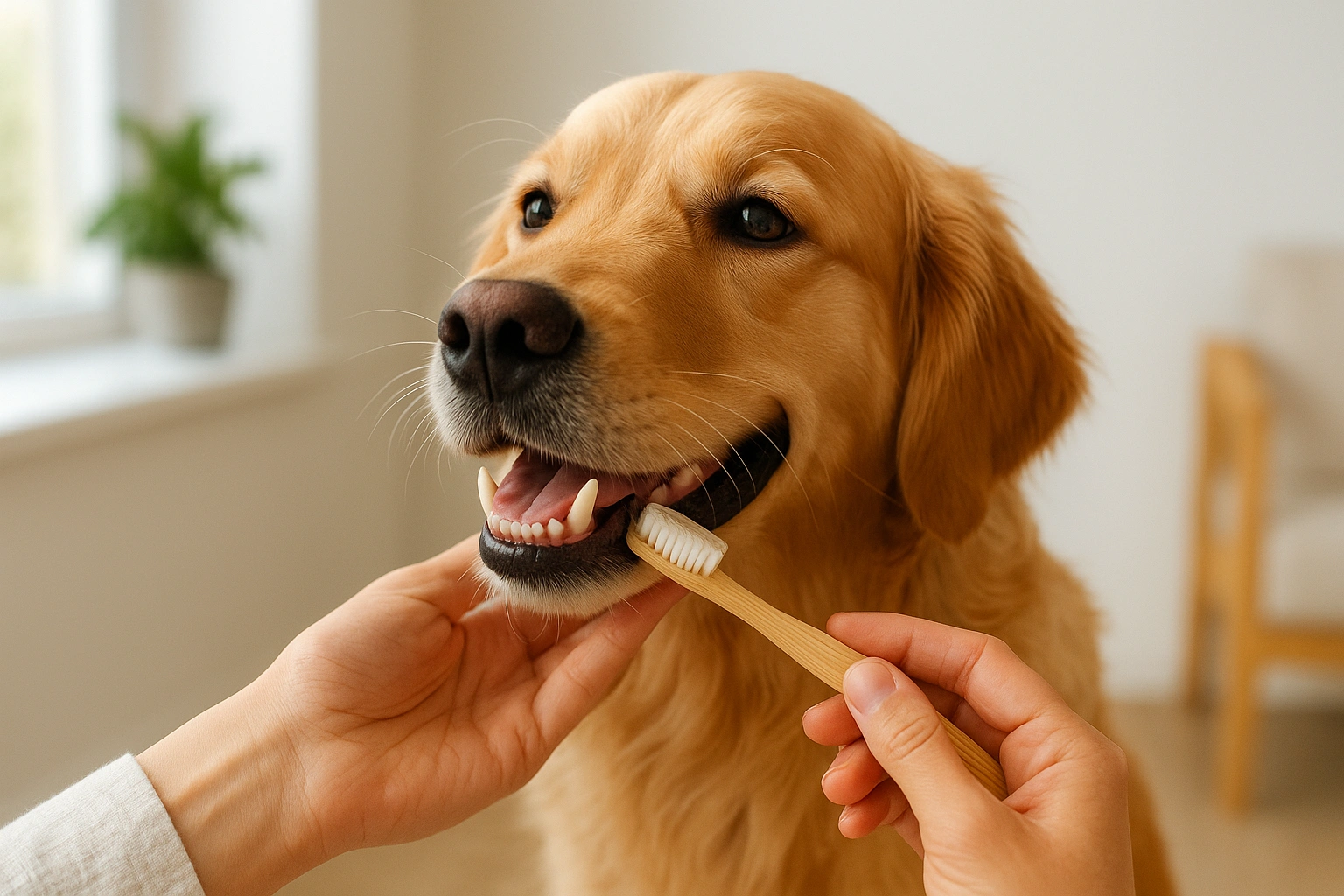
Why Eco-Friendly Dental Care Matters
Adopting a green routine for your pet’s teeth has benefits that go far beyond a sparkling smile, and eco pet dental care makes this simple to achieve.
With eco pet dental care, you lower the risk of serious disease while also reducing your household’s environmental footprint.
Eco pet dental care supports healthier habits by focusing on natural tools and routines instead of disposable plastics and harsh chemicals.
In the long run, eco pet dental care protects your dog’s overall wellness while showing your commitment to a more sustainable lifestyle.
Prevent Serious Systemic Disease
Bacteria from plaque and tartar can enter the bloodstream, potentially damaging vital organs. A clean mouth is the first line of defense for your pet’s long-term health.
Drastically Reduce Plastic Waste
Think of the plastic toothbrushes, toothpaste tubes, and dental chew packaging that are thrown away each year. By choosing sustainable alternatives like bamboo brushes and package-free products, you significantly reduce your contribution to landfills. This aligns with other eco-friendly choices, like using the best eco-friendly cat litter.
Avoid Harsh and Unnecessary Chemicals
Many conventional pet toothpastes contain artificial colors, flavors, and preservatives. A natural pet hygiene approach uses simple, effective ingredients that are safe for your pet and the environment.
Building Your Eco-Friendly Dental Care Routine
A consistent routine is the key to success. Here are the four essential steps:
1. Daily Brushing: This is the single most effective action. Use a sustainable toothbrush and a pet-safe, natural toothpaste.
2. Healthy Chewing: Provide safe, natural chews that help scrape away plaque through mechanical action.
3. Diet and Supplements: Feed a diet that supports oral health and consider natural water additives.
4. Annual Professional Cleanings: Just like humans, pets need regular professional cleanings from a veterinarian to remove tartar below the gumline.
Real-Life Use Case: My DIY Dog Toothpaste
I stopped buying plastic tubes of toothpaste and now make my own simple, effective paste at home. It takes two minutes and my dog loves the taste.
My 3-Ingredient Recipe:
- 2 tablespoons of organic, cold-pressed coconut oil (antimicrobial)
- 1 teaspoon of baking soda (for gentle abrasion)
- A pinch of finely chopped fresh parsley (for fresh breath)
I mix these into a paste and store it in a small glass jar in the fridge. I apply it with a bamboo toothbrush for our daily brushing session.
| Pros | Cons |
|---|---|
| Completely natural and zero-waste. | Lacks enzymatic ingredients of some commercial pastes. |
| Extremely cost-effective. | Needs to be stored in the refrigerator. |
| Dogs love the taste of coconut oil. | Baking soda should be used in moderation. |
Comparison: The Top Eco-Friendly Dental Products
Here’s a look at the best sustainable tools for your pet’s dental toolkit.
| Product | Core Feature | Pros | Cons | Best For |
|---|---|---|---|---|
| Bamboo Toothbrush | Biodegradable handle. | Plastic-free, compostable handle. | Bristles are usually nylon (must be removed). | Everyone; the cornerstone of dental care. |
| Natural Enzymatic Toothpaste | Uses enzymes to break down plaque. | Highly effective, natural ingredients. | Often comes in plastic or aluminum tubes. | Owners wanting maximum cleaning power. |
| Natural Dental Chews | Mechanical abrasion from chewing. | Easy to use, pets love them. | Not a substitute for brushing, can be high-calorie. | Supplementing a daily brushing routine. |
| Kelp-Based Water Additive | Softens existing tartar over time. | Effortless, good for preventative care. | Takes weeks to see results, not for all pets. | Pets who resist brushing (as a supplement). |

Common Mistakes in Pet Dental Care
Avoid these frequent missteps to ensure your routine is safe and effective.
- Ignoring Bad Breath: “Doggy breath” is not normal. It’s the most common sign of dental disease.
- Giving Unsafe Chews: Avoid hard items like cooked bones, antlers, and hard plastic toys, which can fracture teeth.
- Only Focusing on the Front Teeth: Plaque and tartar build up most heavily on the back molars. Be sure to brush the entire mouth.
- Skipping Professional Cleanings: Anesthesia-free cleanings are cosmetic and do not address disease below the gumline. A proper veterinary cleaning is essential.
Expert Tips & Best Practices
We consulted a board-certified veterinary dentist for her top advice.
“The best dental product is the one you will actually use consistently. Find a routine that works for you and your pet and stick with it. Consistency is far more important than the specific brand of toothpaste.”
— Dr. Jan Bellows, DVM, DAVDC
Top 5 Expert Tips:
- Start Young: Get your puppy or kitten used to having their mouth handled from a young age to make brushing easier later.
- Make it Positive: End every brushing session with praise and a high-value (but healthy) treat.
- Use the Right Tools: A soft-bristled, appropriately sized brush is key. For small dogs, a finger brush can be a great starting point.
- Check for the VOHC Seal: When buying dental chews or treats, look for the Veterinary Oral Health Council (VOHC) Seal of Acceptance.
- Lead by Example: Let your dog see you brushing your own teeth to normalize the activity.
Frequently Asked Questions (FAQ)
Q: Can I use human toothpaste on my dog?
A: No, never use human toothpaste on your dog. It contains ingredients like fluoride and xylitol which are highly toxic to dogs. Always use a toothpaste specifically formulated for pets.
Q: How often should I brush my dog’s teeth?
A: For best results, daily brushing is recommended. However, even brushing 3-4 times a week can make a significant difference in preventing plaque and tartar buildup.
Q: Are dental chews enough to keep my dog’s teeth clean?
A: While dental chews can help reduce plaque, they are not a substitute for regular brushing and professional cleanings. They are best used as a supplemental part of a complete eco pet dental care routine.
Q: What’s a natural way to freshen my dog’s breath?
A: Adding fresh, finely chopped parsley or mint to your dog’s food can help freshen their breath naturally. However, persistent bad breath is a sign of underlying dental disease and should be checked by a vet.
Q: Is a professional dental cleaning under anesthesia safe for my dog?
A: Yes, when performed by a qualified veterinarian with proper pre-anesthetic bloodwork and monitoring, it is a very safe and necessary procedure. It’s the only way to clean below the gumline and address serious dental issues.
Conclusion
A commitment to **eco pet dental care** is a powerful investment in your dog’s long-term health and a testament to your sustainable values. By building a consistent routine of brushing, providing healthy chews, and using sustainable products, you can prevent painful dental disease and reduce your environmental footprint. A healthy smile is a key part of **natural pet hygiene**, ensuring your companion lives a long, happy, and comfortable life. For more tips on sustainable pet ownership, explore our resources at weton.biz.id.