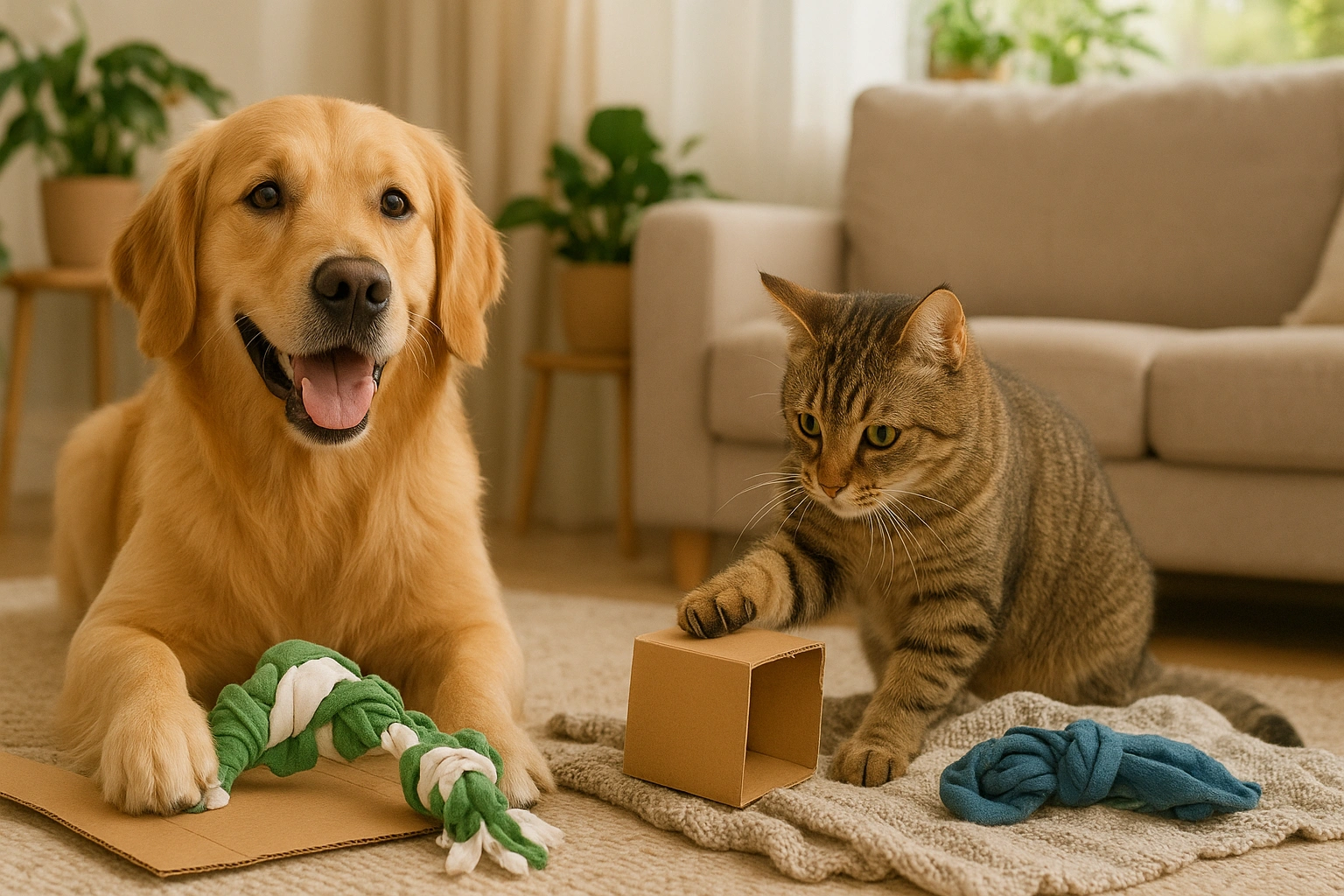
No yard? No problem. Keep your pet fit and happy with these sustainable indoor activities.
Introduction
Living in a small apartment or home doesn’t mean your pet is doomed to boredom, and eco pet exercise tips can help transform limited space into an active environment.
A shocking number of indoor pets are under-stimulated and overweight, but with eco pet exercise tips you can prevent health and behavioral issues before they start.
As a pet parent in 2025, you can provide a rich, active life for your companion, and eco pet exercise tips make it possible even without a backyard.
This guide is packed with creative eco pet exercise tips that use sustainable, upcycled, and DIY materials to turn any small space into a fun fitness playground.
What Are Eco-Friendly Pet Exercise Tips?
Eco pet exercise tips are built on a philosophy of providing both physical and mental stimulation for pets using sustainable, low-waste methods indoors.
By following eco pet exercise tips, you can prioritize creativity over consumption, finding new ways to enrich your pet’s routine without excess plastic.
Eco pet exercise tips encourage the use of household items, upcycled materials, and a little ingenuity to support safe and fun pet fitness at home.
With eco pet exercise tips, you also focus on mental enrichment as much as physical activity, ensuring that a tired brain is just as valuable as a tired body.
The need for such solutions is clear. As urbanization increases, more people are living in smaller spaces with pets. A recent report highlighted by the AVMA shows a direct link between lack of exercise and the rising rates of pet obesity, making innovative at-home fitness solutions more critical than ever.
Why At-Home Pet Fitness Matters
A commitment to indoor eco pet exercise tips brings profound benefits for your pet’s overall health and long-term happiness.
By applying eco pet exercise tips consistently, you also create a calmer home environment with fewer behavior problems and more enrichment.
Eco pet exercise tips save money by reducing the need for costly toys or equipment while also helping the planet through upcycling.
In the end, eco pet exercise tips support not only your pet’s wellness but also a sustainable lifestyle that benefits your entire household.
Combats Obesity and Prevents Disease
Regular exercise is the number one defense against obesity and its related health issues, such as diabetes and joint problems. Consistent indoor activity keeps your pet lean and healthy, regardless of the weather outside.
Reduces Boredom and Destructive Behaviors
A bored pet is a destructive pet. Chewed furniture, scratched doors, and excessive barking are often signs of pent-up energy. Mental and physical exercise provides a positive outlet for this energy, leading to a calmer, happier companion. This is a core component of sustainable pet care, just like choosing the best eco-friendly cat litter to create a healthy indoor environment.
Saves Money and Reduces Plastic Waste
By following eco pet exercise tips, you can turn simple household materials into fun toys and games that save money and keep pets engaged.
Eco pet exercise tips also help reduce waste, since homemade or upcycled playthings prevent more plastic toys from ending up in landfills.
With eco pet exercise tips, every activity becomes a chance to balance your budget while keeping your pet active and healthy.
Ultimately, eco pet exercise tips are a win-win for both your companion’s fitness and the planet’s well-being.
The Core Principles of Indoor Pet Fitness
An effective indoor exercise plan is built on three key ideas:
1. Engage the Brain: Mental stimulation can be just as tiring as physical exercise. Focus on games that make your pet think, sniff, and solve problems.
2. Use Vertical Space: Especially for cats, walls are an untapped resource. Shelves, perches, and cat trees turn a small floor plan into a multi-level adventure zone.
3. Short, Intense Bursts: Pets don’t need a marathon session. 10-15 minutes of focused, high-intensity play two or three times a day is more effective than an hour of half-hearted activity.
Real-Life Use Case: The 5-Minute Cardboard Puzzle Feeder
I stopped using a standard food bowl and now feed my dog exclusively from DIY puzzle feeders. My favorite is made from a simple cardboard box.
How I Make It:
- I take a small cardboard shipping box.
- I stuff it loosely with crumpled packing paper or old toilet paper rolls.
- I sprinkle my dog’s kibble inside, among the crumpled paper.
- I close the box flaps (but don’t tape them).
It takes him about 10 minutes to sniff, nudge, and paw his way through the box to get his meal. It turns feeding time into a rewarding mental workout.
| Pros | Cons |
|---|---|
| Completely free and uses upcycling. | The cardboard box gets destroyed and needs replacing. |
| Excellent mental stimulation. | Can be messy as the dog pulls out the paper. |
| Slows down fast eaters. | Requires supervision to ensure the dog doesn’t eat the cardboard. |
Comparison: Top Eco-Friendly Indoor Exercise Ideas
Here’s how some of the best DIY and upcycled exercise tools stack up.
| Activity | Materials | Pros | Cons | Best For |
|---|---|---|---|---|
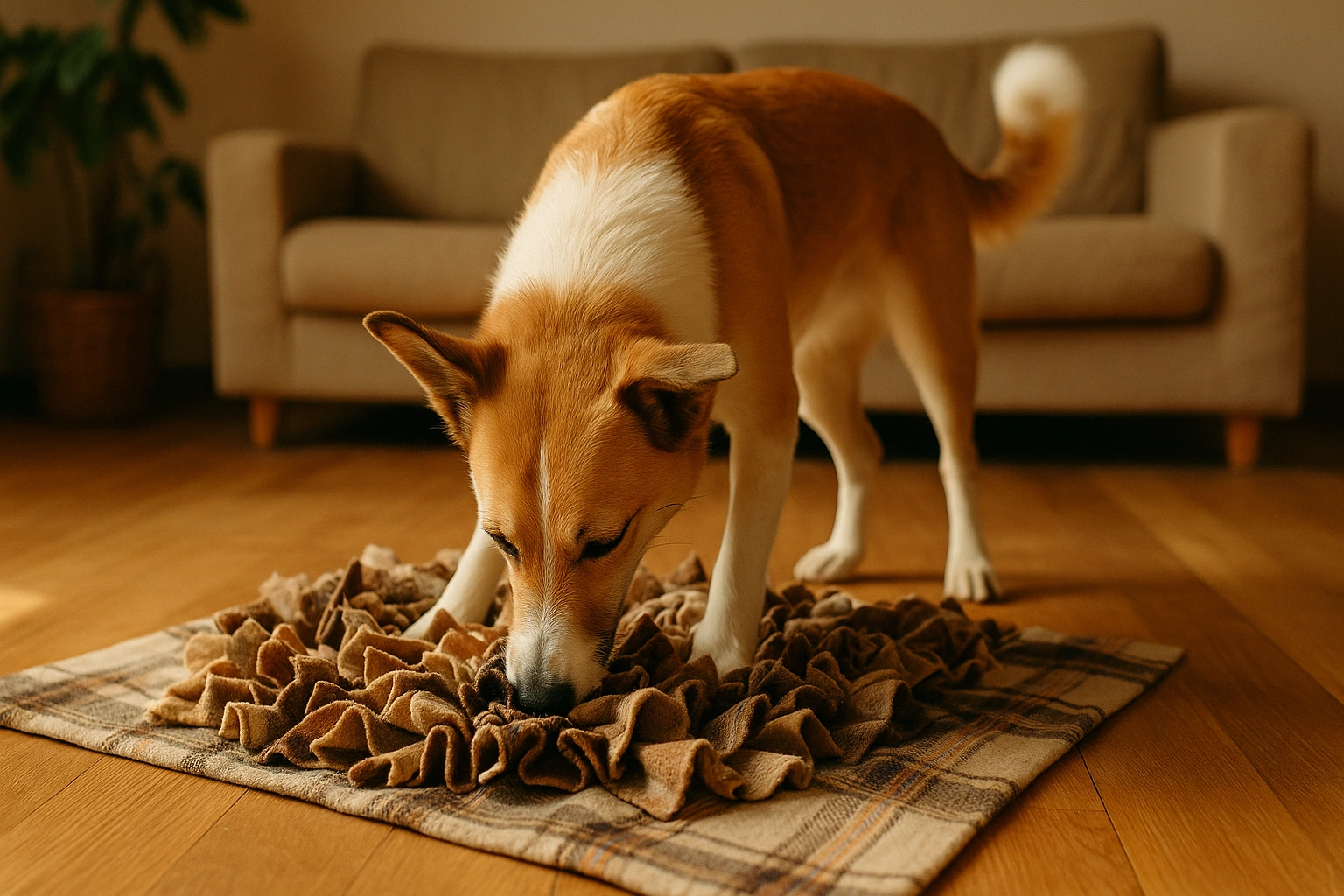
| DIY Snuffle Mat | Old fleece blanket, rubber mat with holes. | Amazing for scent work, very calming. | Takes an hour or two to make. | High-energy dogs that need to calm down. |
| T-Shirt Tug Toy | Old t-shirts. | Free, easy to make, great for bonding. | Not durable enough for power chewers. | Interactive play sessions with dogs. |
| Cardboard Cat Castle | Cardboard boxes, non-toxic glue. | Encourages climbing and hiding. | Gets shredded over time. | Cats in homes lacking vertical space. |
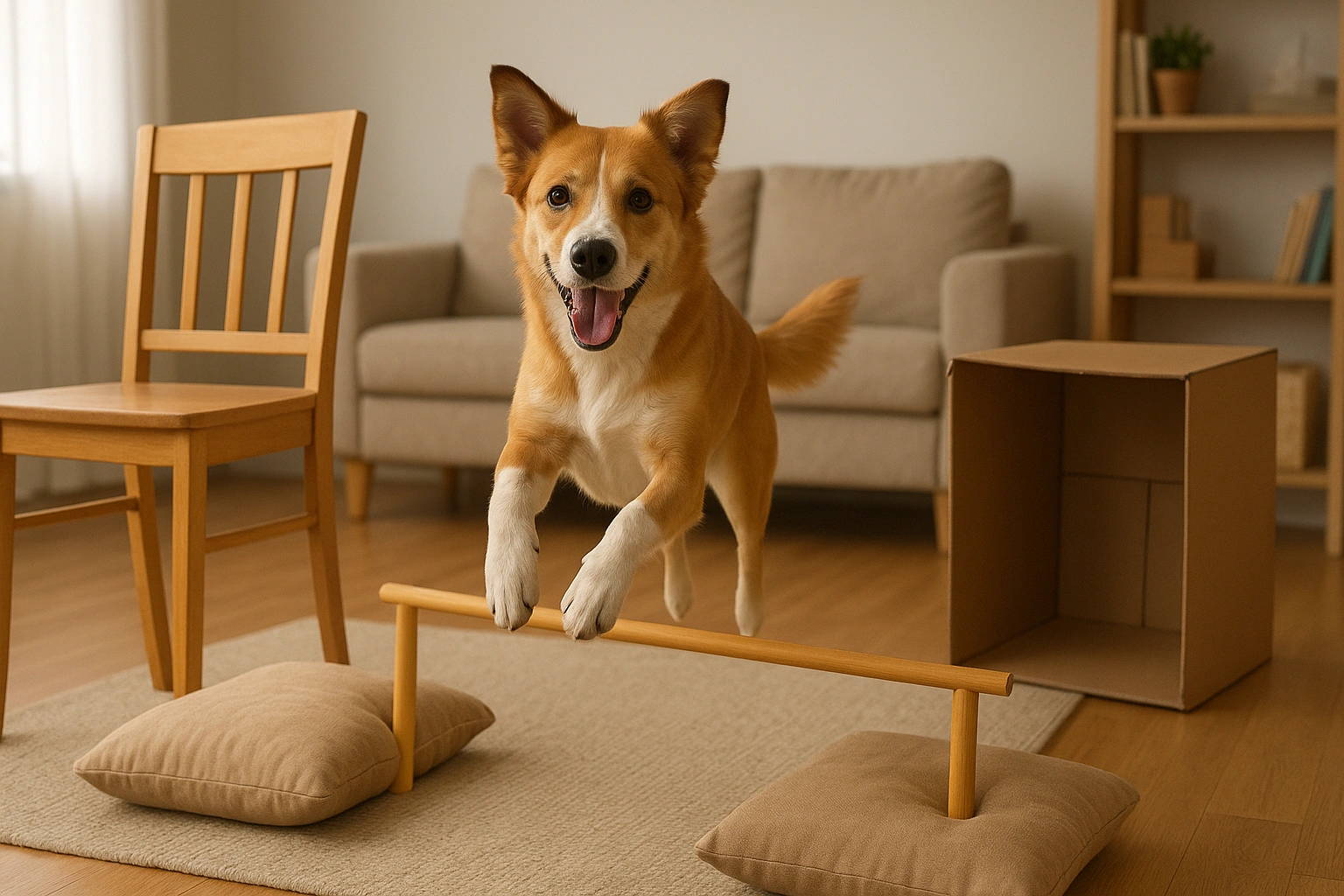
| Indoor Agility Course | Pillows, blankets, chairs, boxes. | Builds confidence and coordination. | Requires some open floor space. | Smart, active dogs that need a challenge. |
Common Mistakes to Avoid
Keep your indoor playtime safe and productive by avoiding these errors.
- Using Unsafe Materials: Avoid anything with small, detachable parts, toxic dyes, or sharp edges.
- Forcing Play: Exercise should be fun. If your pet isn’t interested in a game, don’t force it. Try again later or invent a new game.
- Playing on Slippery Surfaces: Intense games of fetch on hardwood or tile floors can lead to injuries. Use a rug or mat for better traction.
- Neglecting Cool-Downs: After an intense play session, spend a few minutes with gentle petting or a simple “find the treat” game to help your pet settle down.
Expert Tips & Best Practices
We asked a certified animal behaviorist for her top tips on indoor exercise.
“Fifteen minutes of focused scent work is more tiring for a dog than a half-hour walk around the block. Engaging your pet’s natural instincts is the secret to successful indoor exercise. It’s about quality, not just quantity.”
— Dr. Amelia Thorne, Certified Animal Behaviorist
Top 5 Expert Tips:
- Rotate Your Toys: Keep a stash of DIY toys and only bring out a few at a time. Rotating them weekly keeps them novel and exciting.
- Play “Find It”: A simple game where you hide treats around a room is one of the best ways to engage your pet’s nose and brain.
- Teach New Tricks: The mental effort of learning a new command like “roll over” or “play dead” is a fantastic form of exercise.
- Use a Flirt Pole: A flirt pole (a pole with a lure on a string) is a great way to let dogs and cats engage in chasing play in a controlled space. You can easily make one with a PVC pipe, rope, and an old toy.
- Incorporate Exercise into Routine: Make your pet “sit” and “stay” before meals, or do a quick training session while you wait for your coffee to brew.
Frequently Asked Questions (FAQ)
Q: How much exercise does a dog need in an apartment?
A: It varies by breed, age, and energy level, but a general rule is 30-60 minutes of dedicated activity per day. This can be a combination of outdoor walks and indoor mental and physical stimulation. The key is consistency and quality of the exercise.
Q: My cat is lazy. How can I encourage her to exercise?
A: Tap into her natural hunting instincts. Use feather wands or laser pointers (never shine in her eyes) in short, 5-10 minute bursts of play. Puzzle feeders that make her ‘hunt’ for her food are also excellent for encouraging movement and mental engagement.
Q: Are DIY pet toys safe?
A: They can be very safe if you use pet-friendly materials and supervise your pet during play. Avoid small, swallowable parts, toxic glues, and materials that splinter easily. Old t-shirts, cardboard boxes, and fleece blankets are generally safe options.
Q: What is the best way to exercise a senior pet indoors?
A: For senior pets, focus on low-impact mental stimulation. Scent work games using a snuffle mat or hiding treats are excellent. Gentle stretching and short, slow-paced indoor fetch sessions can also help maintain mobility without stressing their joints.
Q: How can I create more space for my pet to play in a small apartment?
A: Think vertically! For cats, install shelves or cat trees to give them climbing space. For dogs, you can clear a designated ‘play zone’ in a room by temporarily moving a coffee table. Even a clear hallway can become a great space for a game of fetch.
Conclusion
A small home is no barrier to a healthy, active pet. By embracing these **eco pet exercise tips**, you can provide endless enrichment for your dog or cat without harming the planet or your budget. The key to successful **pet fitness at home** is creativity, consistency, and a focus on engaging your pet’s mind. Start with one DIY toy or a simple scent game today and watch your pet thrive. For more ideas on sustainable pet ownership, visit us at weton.biz.id.