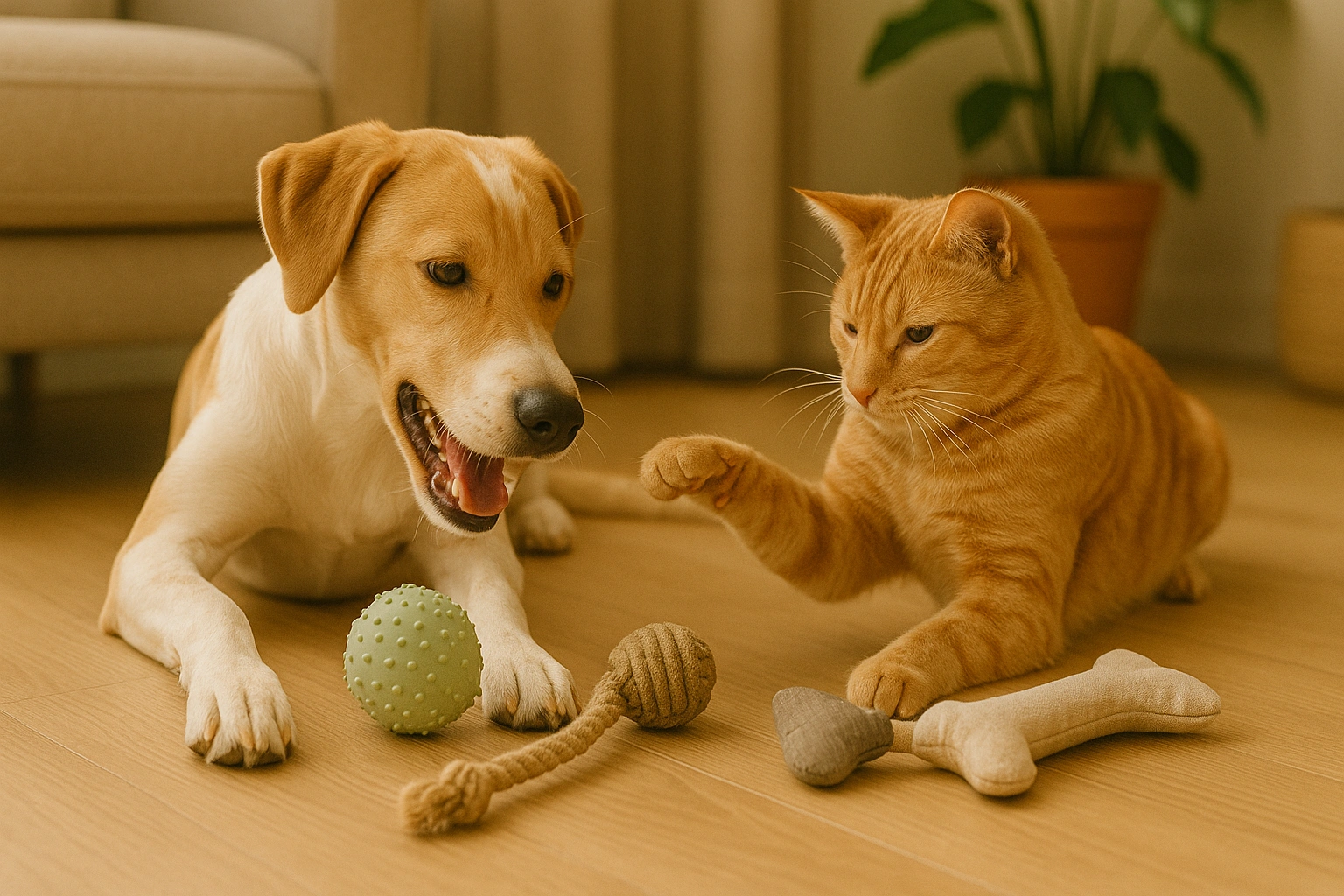
A guide to the most durable, engaging, and sustainable toys for your furry friends.
Introduction
The floor of any pet-friendly home is often a graveyard of half-chewed plastic squeaky toys and frayed polyester wands, but now eco pet toys offer a better option.
The pet toy industry is a multi-billion dollar market, yet eco pet toys help reduce the environmental cost that comes with disposable plastic playthings.
As we become more conscious of our plastic consumption in 2025, eco pet toys are becoming a natural choice for owners who care about safety and sustainability.
This guide is your ultimate resource for eco pet toys, helping you pick options that are safer for pets, kinder to the planet, and just as fun.
What Are Eco Pet Toys?
Eco pet toys are playthings for cats and dogs made from sustainable, natural, or recycled materials, offering a safer and greener alternative to conventional options.
The main idea behind eco pet toys is to reduce reliance on cheap, disposable, virgin plastic toys that dominate the market and contribute heavily to waste.
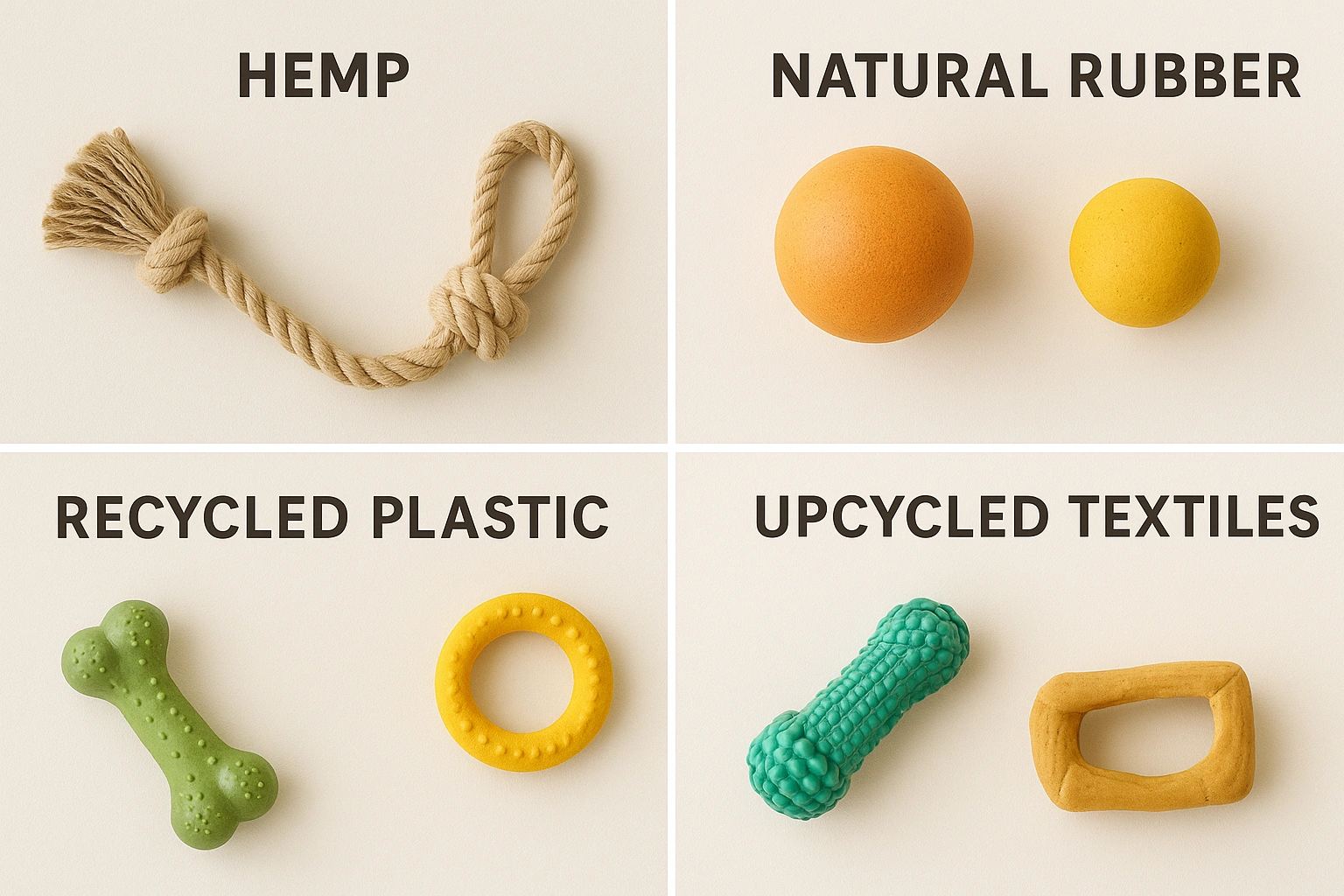
Instead, eco pet toys are created from materials like natural rubber, organic hemp, recycled plastic bottles, and upcycled fabrics, giving pets durable and engaging choices.
Designed with both fun and sustainability in mind, eco pet toys also prioritize safety and longevity, ensuring they support a healthier lifestyle for pets and the planet.
This shift towards sustainability is a direct response to consumer demand. A 2024 consumer report referenced by the Pet Sustainability Coalition found that a majority of pet owners would pay more for sustainable products, signaling a major market trend toward greener gear.

Why Eco-Friendly Toys Matter
Choosing a sustainable toy is a small change with big benefits.
Safer for Your Pet
Many cheap plastic toys can contain harmful chemicals like BPA and phthalates, which can leach out as your pet chews. Eco-friendly toys from reputable brands are made from non-toxic materials, ensuring you’re not inadvertently exposing your pet to harmful substances.
Better for the Planet
From reducing plastic waste to supporting sustainable farming practices for materials like hemp, choosing eco-friendly toys directly lessens your environmental impact. It’s a simple way to extend your sustainable lifestyle to your pet, just like opting for the best eco-friendly cat litter.
Often More Durable
Eco-conscious brands tend to focus on quality and longevity. A well-made toy from natural rubber or dense hemp fabric will often outlast a dozen cheap plastic alternatives, saving you money and reducing waste in the long run.
Core Features: What Makes a Toy “Eco”?
Look for these key characteristics when shopping for sustainable toys:
1. Material Source: Is it a renewable resource (hemp, wool), a recycled material (plastic bottles, rubber), or an upcycled product (fabric scraps)?
2. Safety and Non-Toxicity: The product should be free from harmful chemicals, dyes, and glues. Look for third-party safety certifications.
3. Durability and Longevity: The toy should be well-constructed and appropriate for your pet’s chew style to ensure it lasts.
4. End-of-Life Options: Can the toy be composted or recycled at the end of its life? Does the company have a take-back program?
Product Review: Beco Pets Recycled “Rough & Tough” Turtle
I tested the Beco Pets “Rough & Tough” turtle toy with my terrier mix, who is an expert at finding and destroying squeakers. This plush toy is unique because it’s made entirely from recycled materials.
The outer fabric is a durable weave of recycled polyester, and the stuffing is made from recycled plastic bottles. The seams are double-stitched for extra strength. After a month of vigorous play, the turtle is still in one piece, which is a record in our house. The squeaker is loud and engaging, and I feel much better knowing his favorite toy is made from waste materials.
| Pros | Cons |
|---|---|
| Made from 100% recycled materials. | Not suitable for extreme power chewers (no plush toy is). |
| Very durable for a plush toy due to double stitching. | Higher price point than a standard plush toy. |
| Machine washable and easy to clean. | The squeaker can be quite loud. |
Comparison: Top Sustainable Toy Materials
Here’s how the best eco-friendly materials for pet toys stack up.
| Material | Source | Pros | Cons | Best For |
|---|---|---|---|---|
| Natural Rubber | Sap of rubber trees | Extremely durable, bouncy, safe to chew. | Can be heavy, some dogs are allergic. | Tough chewers, fetch, and puzzle toys. |
| Hemp | Hemp plant fiber | Very strong, antimicrobial, biodegradable. | Can absorb slobber and get stiff. | Rope toys for tug-of-war. |
| Recycled Plastic (rPET) | Recycled plastic bottles | Diverts waste, creates soft and durable fabric. | Not for chewing, can release microplastics. | Plush toys and soft fetch toys. |
| Wool | Sheep fleece | Natural, soft, lanolin has a scent cats love. | Not very durable for dogs. | Cat toys (balls, mice). |
Common Mistakes to Avoid When Buying Eco Toys
Make a smart, safe, and sustainable choice by avoiding these errors.
- Ignoring Your Pet’s Play Style: Don’t buy a delicate wool toy for a dog that loves to shred. Match the toy’s durability to your pet.
- Forgetting About Size: A toy that is too small can be a choking hazard. Always buy toys that are appropriately sized for your pet.
- Falling for “Greenwashing”: Look for specifics. A toy labeled “eco-friendly” with no information about its materials is a red flag.
- Leaving Pets Unsupervised: No toy is 100% indestructible. Always supervise your pet during playtime, especially with new toys.
Expert Tips & Best Practices
We asked a pet enrichment specialist for her top tips.
“The most sustainable toy is often not a toy at all. A cardboard box can be a castle for a cat. An old t-shirt can be a tug toy for a dog. Enrichment is about creativity, not consumption. Before you buy, always ask: can I DIY?”
— Dr. Amelia Thorne, Certified Animal Behaviorist
Top 5 Expert Tips:
- Rotate Toys: Keep most of your pet’s toys put away and rotate a few out every week. This keeps them feeling new and exciting.
- Prioritize Interactive Toys: Toys that you use to play *with* your pet (like a hemp rope or a feather wand) are best for strengthening your bond.
- Make a DIY Puzzle Toy: Take an old muffin tin, place a treat in each cup, and cover them with tennis balls. It’s a simple, free brain game.
- Wash Toys Naturally: Clean toys regularly using a simple solution of vinegar and water to avoid harsh chemical residues.
- Inspect Toys Regularly: Check toys for signs of wear and tear, and repair or discard them before they become a safety hazard.
Frequently Asked Questions (FAQ)
Q: Are eco-friendly toys durable enough for a power chewer?
A: Yes, many are! Look for toys made from high-density natural rubber or specialized recycled materials like West Paw’s Zogoflex. These materials are specifically designed for toughness and can often outlast conventional plastic chew toys.
Q: What is the safest material for pet toys?
A: There isn’t one single ‘safest’ material, but some of the best options include 100% natural rubber, organic hemp, and untreated wool. For any toy, the key is to ensure it’s non-toxic, appropriately sized for your pet, and free from small, swallowable parts.
Q: How can I make a simple DIY toy for my cat?
A: A simple and effective DIY cat toy is a ‘snake’ made from an old t-shirt sleeve. Just cut off a sleeve, stuff it with some catnip and leftover fabric scraps, and tie off the ends. It’s a perfect, crinkly kicker toy.
Q: Are toys made from recycled plastic safe for my dog to chew on?
A: From reputable brands, yes. These companies use post-consumer recycled plastics that are thoroughly cleaned and processed to be free of harmful chemicals like BPA and phthalates, making them safe for your pet.
Q: What should I do with old pet toys?
A: First, see if they can be repaired. If not, some brands like West Paw have take-back programs to recycle their old toys. Otherwise, you may need to dispose of them. This is why choosing durable, long-lasting toys is the most sustainable option.
Conclusion
Choosing **eco pet toys** is a joyful way to enrich your pet’s life while honoring your commitment to the planet. By opting for **sustainable dog toys** and cat toys made from natural and recycled materials, you reduce waste, ensure your pet’s safety, and support innovative, ethical companies. Playtime is precious; make it sustainable. For more tips on eco-friendly pet ownership, visit us at weton.biz.id.